Friday, July 30, 2010

Poustic Rotti (Nutritious Indian Flat bread)

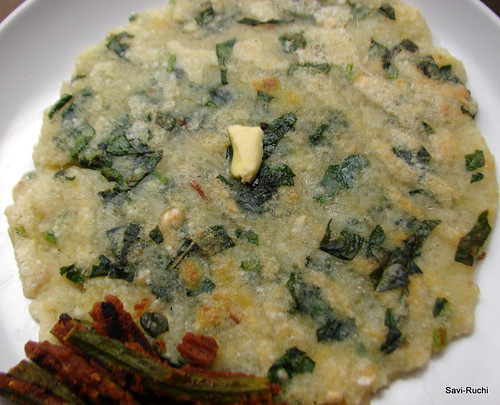
This rotti is one of the most successful experiment till date. I used whatever was handy & the result was yummilicious rotti. It all started with my pantry running short of rice flour. I thought for a long time about what to name for this rotti & finally came up with "Poustic rotti" because this rotti as the name suggests is literally filled with nutrition.
                            (Rotti served with eggplant-capsicum gojju/curry & badam milk)


Ingredients: (Makes 8 rottis)
For rotti:
Drumstick leaves: 1.5 cups
Rice flour: 1.5 cups
Jowar flour/Sorghum flour/Jolada hittu: 1/2 cup
Ragi flour/Finger millet flour: 1/2 cup
Corn meal/makki ka aata/mekke jolada hittu: 1/2 cup 
Fine semolina/Cheroti rawa: a fistful
Flax seed powder: 1 tbsp
Cooked rice: a fistful
Onion: 1 medium (finely chopped)
Grated coconut: 2 tbsp
Cumin seeds: 1 tsp
Green chilli paste: 1/2 tsp (optional, I normally donot add this)
Salt: According to taste
Water: As needed


For cooking the rotti:
Oil: 1 tsp for each rotti


Wax paper/Brown paper/aluminium foil to pat the rotti.


Method:

  • Remove the drumstick leaves from the stem (use only the leaves, discard all the stem), wash it thoroughly in water & finely chop them.
  • Mash the rice thoroughly.
  • Mix the mashed rice, drumstick leaves with all the above mentioned ingredients(except water) in a large bowl. Add water little at a time & make a smooth dough with it. (Dough consistency should be similar to that of a cutlet or patty dough).
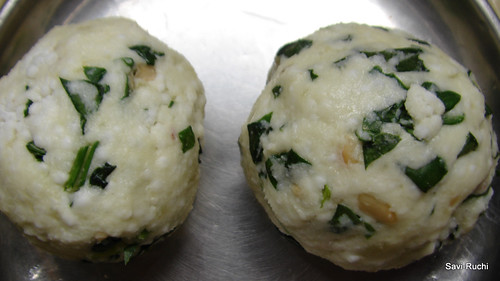
  • Make medium orange sized balls with the dough. 
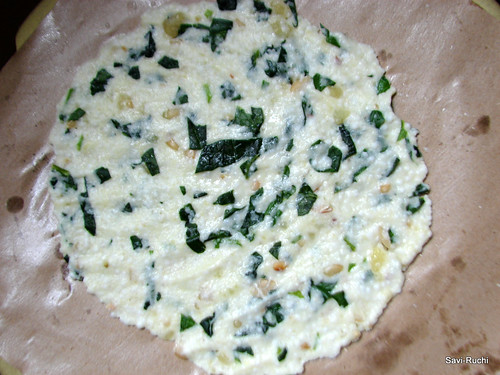
  • Heat the griddle. Meantime, sprinkle 1-2 drops of oil to the brown paper. Place the batter on the paper & start patting them. Wet your hands in between (this helps in patting the rottis easily).  
  • When the griddle is hot, smear few drops of oil to the griddle & put the brown paper on the griddle.
  • After 5-10secs, slowly take off the brown paper alone. Add 1/2 tsp of oil & cook on slow-medium heat for 1 to 2 mins on both sides. 
  • Repeat the process for the remaining rottis & serve it hot/warm with a curry/chutney/dip of your choice. 

Notes:
  • Drumstick leaves could be replaced by other leafy vegetables like coriander leaves, dill leaves or fenugreek leaves.  
  • Grated carrots or grated cucumber could be added for extra nutrition :)
Verdict: I am forced to write this, all Karnataka style rotti lovers will love to eat this rotti again & again. 

Monday, July 26, 2010

Bendekayi huli | koddel | Okra Sambar : Vegan Okra Side dish


Though I stayed in India for 5 weeks, I feel I could have stayed there for long (btw, this was my second visit this year..).., yeh dil maange more! My son's condition is no better than mine. Last weekend.., he was telling me.., appa mane aithalla, eega punah ajji manege hogona!! (Now that we visited daddy's house, I think we should go now to grandmom's home!!).


This recipe is to revive the memories I spent with my loved ones. My mom-in-law makes excellent ladies finger sambar. I learnt this from her. Before I jump into the recipe, here is a quick note. For this recipe, you don't have to fry the ladies finger to remove the stickiness from it. Tamarind water + jaggery + salt will do it for you. (I have mentioned here about how to remove the stickiness of the ladies finger). So, even if you are an amateur in using ladies finger, you can go ahead preparing this one.  


Ingredients: (Serves 4-6)
Ladies Finger/Okra: 2 cups (chopped into 1 inch long pieces)
Tamarind : 1 medium lemon sized (soaked in water)
Jaggery: 1.5 tsp (adjust according to your family needs)
Salt:According to taste
Toor dal/Pigeon peas: a fistful (optional, my mom-in-law never adds it)
Turmeric: a pinch


For sambar masala/spice paste:
Grated coconut: 1 cup (fresh/frozen)
Oil: 1 tsp
Urad dal: 1 tsp
Cinnamon: 1/2 inch stick
Mustard seeds: 1/4 tsp
Cumin seeds: 1 tsp
Dhania/Coriander seeds: 2.5 tsps
Curry leaves: a string (8-10)
Red chillies: 4-6 nos (adjust according to the heat needed)
Asafoetida: a pinch


For tempering:
Coconut oil: 1 tsp (any oil of your choice could be used)
Mustard seeds: 1/4 tsp
Curry leaves: 4-6 nos


For garnishing:
Coriander leaves: 1 tbsp (finely chopped)


Method:
For spice paste:
  • Meantime, while the ladies finger is being cooked, prepare the ground paste. Add the oil to a small pan, when oil is hot, add cumin seeds, mustard seeds. When the seeds turn golden brown, add cinnamon, coriander seeds, curry leaves. Saute till the seeds leave out a nice aroma & curry leaves become crisp. Add the red chillies & saute till the red chillies change color(takes around 30secs to 1 minute). Turn off the heat & add asafoetida. Allow the roasted spices to cool. 


  • Once the spices come to room temperature, make a fine paste of the spices + grated coconut, by adding enough water. 
For the sambar:
  • Pressure cook the pigeon peas/toor dal with a small pinch of turmeric for 3-4 whistles. Allow it to cool & mash it gently.
  • Extract the juice from the tamarind. Squeeze the juice & dilute it by adding 2 cups of water. 
  • Pour the tamarind juice to a big vessel. Add salt, jaggery to the tamarind juice. Add the chopped ladies finger to the tamarind water. Boil the vegetable till soft & yet firm.
  • When the ladies finger is cooked, add the cooked dal, spice paste & mix well. Pour in a 1/2 cup (a little less is fine too) of water & allow the mixture to boil on a medium-high heat. 
  • Finally prepare the tempering* using the ingredients mentioned under tempering section & pour the tempering on the sambar prepared. Garnish it with corinander leaves. Mix well & serve hot with rice & a side dish of your choice.

*Here is the method for preparing the tempering. Heat oil in a small pan. When oil is hot, add mustard seeds. When mustard seeds splutter, add curry leaves & saute till curry leaves are crisp. Turn off the heat. Tempering is ready.

Tuesday, July 20, 2010

Karibevu Tambuli (Curry leaves in yogurt sauce)


Curry leaves tambuli is good for digestion, has cooling effect on the body & rich in iron. Just like other tambuli, this is very easy to prepare. This dish goes well with rice. 

Refer here to know more about curry leaves.

Ingredients:
For tambuli:

Grated coconut: 2 tbsp (fresh/frozen)
Curry leaves: a fistful (use tender leaves. Use light colored leaves. Refer here to understand on how to choose tender leaves) 
Green chilli: 3 nos (adjust according to the spice level needed)
Cumin seeds: 1 tsp
Buttermilk: 2 cups
Salt: According to taste

For tempering:
Oil: 1 tsp
Mustard seeds: 1/4 tsp
Asafoetida/hing: a pinch
Curry leaves: 4 nos

Method:

  • Make a smooth paste of coconut, curry leaves, green chillies, cumin seeds. Scoop out the paste. Add buttermilk, salt to the paste prepared & mix well. 
  • Prepare the tempering. Heat oil in a small pan. When oil is hot, add mustard seeds. When seeds splutter, add curry leaves, asafoetida & finally pour the tempering on the tambuli prepared. 
  • Serve it cold or at room temperature with rice & fritters/papad/pickle.


Tuesday, July 13, 2010

Shunti chutney (Ginger chuntey/dip)

Sorry people for vanishing without notice. I was enjoying my vacations in India. After I'm back from my trip, I am in no mood to cook. Hence, for the next couple of weeks until I settle down, I am planning to post the recipes that are waiting in my drafts.

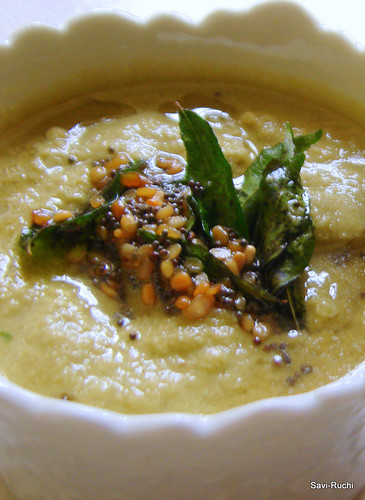
Shunti/Ginger chutney is a versatile side dish/dip that goes well with any South Indian breakfast items like dosa, idli, rotti, chapathi, upma or uttappam. Here is the recipe for those who wish to try!


Ingredients:
For chutney:
Grated coconut: 1 cup
Ginger: 1 inch (fresh)
Roasted gram dal/putani/hurigadale: 1 tbsp
Tamarind extract: 1/4 tsp (thick extract)
Green chillies: 2 nos
Salt: According to taste
Coriander leaves: 1 tbsp (optional)

For tempering:
Oil: 1 tsp
Mustard seeds: 1/4 tsp
Curry leaves: 4 nos
Urad dal: 1/2 tsp (optional)

Method:

  • Remove the skin of the ginger & chop it.
  • Mix all the ingredients(except tempering ingredients), add little water & grind them to a smooth paste. Adjust the consistency of the chutney by adding water. Scoop out the paste in a bowl.
  • Now prepare the tempering by adding oil to a small pan When oil is hot, add mustard seeds & urad dal. When dal turns golden, add curry leaves & turn off the heat. 
  • Pour the tempering over the chutney, mix well & serve.

PS: During my vacation, I have received many comments. I remember that there were some recipe requests & awards too. I'll collect the awards and look at your requests soon. Thanks for your patience !!!

Saturday, May 29, 2010

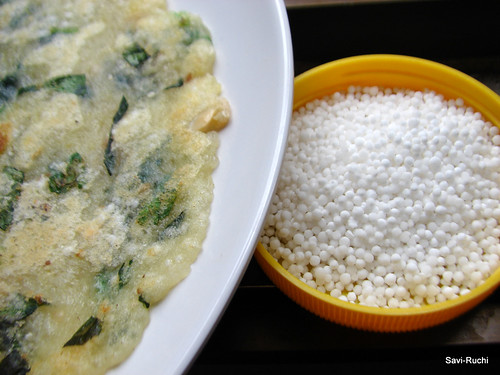
Sabbakki Rotti(Sago Indian Bread)

Lakshmi shared this recipe with many of us. I also saw an interesting version of it in Veni's blog. Thank you both. I mixed both the versions & made my own :)
If you give one such rotti to your child, you will be relieved for the day, b'cos this has the carbohydrates, protiens, essential fatty acids & fiber. Isn't this a perfect menu for brunch or breakfast?


Here is my version of the same.

Ingredients:

Sago/Sabudana/Sabbakki : 1.5 cups
Rice flour: 1 cup
Potato: Approximately 1 cup (boiled &mashed)
Peanuts:1 tbsp (roasted & coarsely crushed)
Spinach leaves: Approximately 3/4 to 1 cup (finely chopped)
Salt:According to taste
Green chilli paste: 1/2tsp (optional, I normally donot add this)

Other ingredients:
Oil: 1 tsp or more for each rotti.

For patting the rotti:
Wax paper/brown paper/aluminium foil: 1 no
Water: 1 cup (to wet the hands)

Method:
  • Wash the sago seeds in water & drain the water immediately. The moisture in the water us sufficient to make the sago soft. Let it rest for 10-15mins.
  • Mix all the other ingredients together. Add the soaked sago too. Add few tbsps of water if needed. Make it a soft dough. 
  • Make medium orange sized balls(the above batter will make around 10 balls).
  • Heat the griddle. Meantime, sprinkle 1-2 drops of oil to the brown paper. Place the batter on the paper & start patting them. Wet your hands in between (this helps in patting the rottis easily).  
  • When the griddle is hot, smear few drops of oil to the griddle & put the brown paper on the griddle.
  • After 5-10secs, slowly take off the brown paper alone. Add 1/2 tsp of oil & cook on slow-medium heat for 1 to 2 mins on both sides.
  • Repeat the process for the remaining rottis & serve it hot/warm with a curry/chutney/dip of your choice. 

                                 (I served the rotti with stuffed okra)

Notes:
  • I have used fine variety of sago, hence I did not soak it. If you are using the medium sized sago as she has done, then you need to soak it for 4-5 hours, drain the water & then use.
  • This dish is very forgiving, you can add whatever & how much ever you feel like.
  • If you do not have time to boil the potatoes, grate them & put them. It tastes equally good.
  • Coarsely crushed peanuts could be replaced with the roasted peanut powder.
  • If you donot have the wax paper/brown paper or not confident of using them, try patting the rottis directly on the griddle by cooling them (as shown here).
  • Spinach leaves could be replaced with coriander leaves, grated coconut or any other leafy vegetables of your choice. 

Monday, May 24, 2010

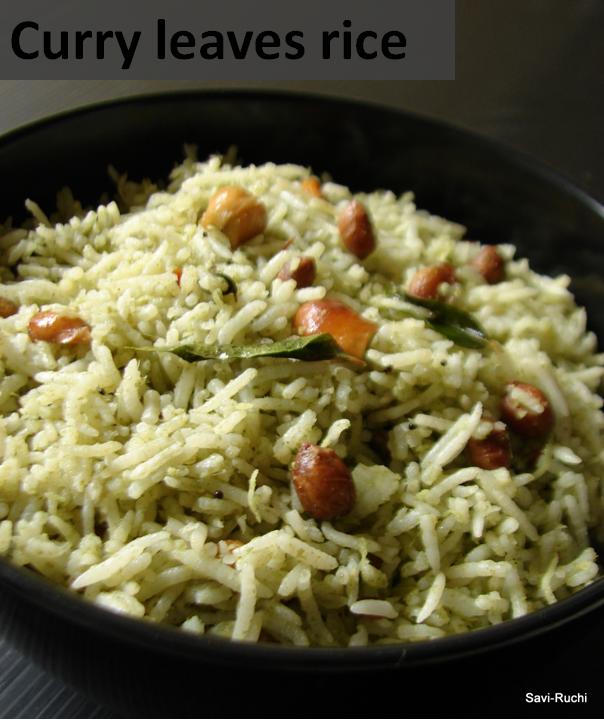
Karibevu Chitranna(Curry leaves rice)

Some information about curry leaves: (Courtesy: Indus Ladies)

Curry Leaves have a special place in Ayurvedic Medicines, because of their many health benefits.

Digestive Disorders: Buttermilk with paste of curry leaves, common salt and cumin seed powder is a common home remedy for digestive upset in Indian Homes. The curry leaves juice is also effective against heartburn.
A paste of these leaves with limejuice and honey/sugar/crystal sugar powder is a time-tested medicine in the treatment of “morning sickness” (hyperemesis graviderum). This paste is also useful for treating excessive vomiting and nausea in pregnant women.

Diabetes: Scientists are finding more about curry leaf – as it contain agents that slow down the rate of starch-to-glucose breakdown in people with diabetes. The curry leaves could control the amount of glucose entering the bloodstream. Ayurvedic research suggests a paste of about 8 to 10 fresh, fully-grown curry leaves is to be taken on an empty stomach in the morning for a minimum of 3 months for controlling non-insulin dependent diabetes mellitus. It also cures diabetes due to obesity, as the leaves have weight reducing properties.

Hair Tonic: These leaves nourish the hair roots. Add twenty leaves to a cup of coconut oil and heat the oil till the leaves turn black. Apply this blackened residual oil to the scalp 2-3 times a week. This oil forms an excellent Ayurvedic hair tonic to stimulate hair growth. This oil stops premature graying.

Herbal Mouth Wash: The fresh curry leaves contain 2.6% volatile essential oils along with chlorophyll, beta-carotene and folic acid, riboflavin, calcium and zinc. All these are excellent for keeping good oral health. Chewing 2 to 4 fresh curry leaves with 10 to 15mls water in the mouth, swishing for 5 to 7 minutes and rinsing the mouth out with water is a great herbal Mouthwash.

Kidney Disorders: Ancient Indian Medicine for kidneys recommends the juice of the curry plant root.
Insect Bites, Burns and Bruises: Curry leaves applied as a poultice can be effectively used to treat burns, bruises and skin eruptions. Fruits of the Curry Leaves with lime juice are used in treating insect bites and poisonous stings.

Some more information can be found here.

Curry leaves are reaching the price of gold in Mysore & Chikmagalur this year, because of some infections to the entire curry leaves tree(both domestic & commercial). My mom who was proud of her tall & healthy curry leaves tree is now running around to get them treated.

I am happy that I get these leaves in abundance here. Infact, if we buy veggies at Little India for more than 5-10$, we get these leaves as complimentary gift (Isn’t this a nice word for “free”). On top of that, I have a small curry leaves plant left over by my house owner. During my visit to India last December, I did not forget to learn a handful of dishes that uses curry leaves as the main ingredient. This rice is one of them :) Ever since I have prepared this, it has become a great hit & these days; this chitranna is in my fortnight list. This rice does not call for any special ingredients. It is simple, healthy, easy to prepare & easy to digest too ;)


Ingredients:

Rice: 2 cups (Use any Indian rice of your choice. Do not use sticky rice)
Water: 4 cups
Salt: According to taste
Lemon juice: 2 - 2.5 tbsp

For curry leaves paste:
Curry leaves: 1 cup (tightly packed)
Urad dal/Split & deskinned black gram: 1 tbsp
Green chilli: 4 nos (adjust according to the heat)
Grated coconut: 1 tbsp (fresh/frozen)
Salt: As needed
Sugar: a big pinch (optional, but recommended)

For tempering:
Oil: 2 tbsp
Mustard seeds: 1 tsp
Cumin seeds: 1/2 tsp (optional)
Curry leaves: a string
Turmeric: a pinch
Urad dal: 1 tsp
Peanuts/Groundnuts: 1 tbsp
Chopped cashew nuts: 1 tsp (optional)

For garneshing:
Grated coconut: 2-3tbsp

Method:

  • For curry leaves paste: 
    • Dry roast the curry leaves until all the moisture is removed & the leaves become crisp(the curry leaves could alternatively be sun dried or roasted in oven).Dry roast the urad dal/black gram until golden brown. Allow them to cool. Make a fine paste of curry leaves, urad dal, green chilli, salt, coconut. Add few teaspoons of water to make a paste. Do not add too much water. 
  • Cook the rice & allow it to cool (Left over rice would make the job easy:) )
  • Heat oil in a broad pan, when oil is hot, add mustard seeds, when mustard seeds splutter, add cumin seeds & urad dal. When dal turns golden, add peanuts. Roast peanuts until they are golden brown, follow it by cashew nuts. Add curry leaves & then pour in the paste. Saute until the moisture is gone (for 2-3mins, maximum). Finally, add turmeric & turn off the heat.
  • Spread the rice on a large bowl, add the tempering prepared, salt, sugar, lemon juice, coconut & mix the rice gently. Ensure not to make the rice mushy. 
  • Curry leaves rice is ready to be served with a curry/raitha/papad.


Notes:
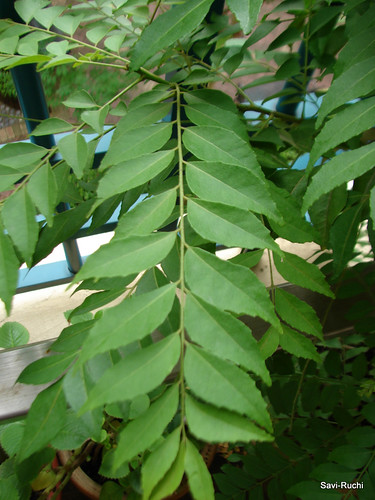
  • Do not use dark colored curry leaves to prepare this rice as it could become a little bitter. Try to choose, light colored or freshly picked curry leaves.
  • Addition of sugar/jaggery reduces the bitterness of the curry leaves.
  • Curry leaves donot blend well if water is added at the initial stage. Hence, while making the paste of curry leaves, first add the leaves to the mixer jar/spice jar & give it a run(donot add water). Let the curry leaves become a coarse powder, then add all the ingredients & pulse it again to get a smooth paste.
(My curry leaves plant: I love it as they always give such brilliant colored leaves to me!!. This was left by our house owner. I am nurturing it)

Monday, May 17, 2010

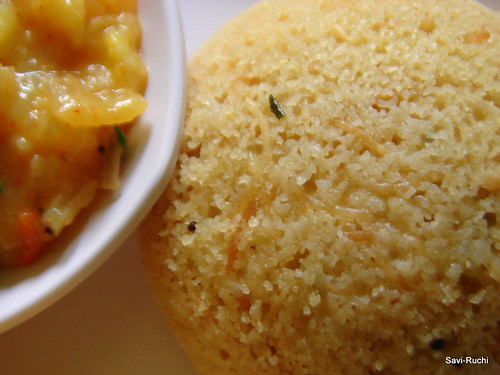
Shavige idli (Vermicelli Idli)

The preparation of shavige idli is very similar to the rawa idli/semolina idli. This idli is normally served with bombay saagu(curry) or vegetable saagu(curry).


Ingredients:
Semolina/Rava: 2 cups
Shavige/Vermicelli: 1 cup (I use Bambino or MTR vermicelli)
Buttermilk: 2 to 2.5 cups
Water: Around 1/2 cup (I didnot measure this)
Salt: According to taste
Grated coconut: 1 tbsp
Baking soda or Eno's fruit salt: 1/4 tsp

For tempering:
Oil: 1 tbsp
Cashew nuts: 2 tbsp (broken)
Gram dal/Channa dal: 1 tsp (optional)
Mustard seeds: 1/4 tsp
Curry leaves: 8-10

Method:
  • Dry roast the semolina, vermicelli separately until light brown & allow them to cool.
  • Mix together semolina, vermicelli, buttermilk, grated coconut.
  • Prepare the tempering. Heat oil in a small pan, when oil is hot, add mustard seeds, when mustard seeds splutter, add broken cashew nuts, channa dal/gram dal & saute until they turn golden brown. Add curry leaves & saute for 5-7secs or until curry leaves become crisp.
  • Pour the tempering to the semolina-vermicelli mixture, mix well & keep the batter aside for 30mins.
  • After 30mins, the semolina would have absorbed the buttermilk & the batter would have become dry. Add water & adjust the consistency of the batter (a little thicker than the normal idli batter).
  • Finally add salt, baking soda to the batter, mix well & pour around 2 tbsp of batter to each idli mould & steam the idlis for 20-25mins on medium heat.
  • Serve it hot with a chutney or curry of your choice.


Notes:
  1. Ensure to use a little sour buttermilk to get spongy & soft idlis.
  2. Baking soda could be replaced with same amount of Eno's fruit salt.
  3. Add 1 cup water to 1 cup thick yogurt. Whisk well. 2 cups buttermilk is ready to be used. Keep it outside for 2 hours to make the buttermilk sour.
Other idli recipes here:
Rava Idli/Semolina idli
Mallige idli/Soft idli

Featured Post

Noodles and Vegetables with Honey Ginger Sauce

Am I the only one who crave for noodles when sick with cold and sore throat? I love this noodles with honey-ginger sauce and it is perfe...